-
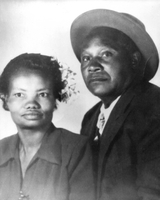
Black and white portrait of Ola and Willison McDowell. Ola is wearing flowers in her hair, and Willison is wearing a hat.
-
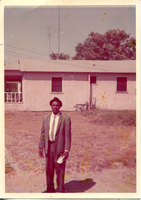
Color photo of Garfield Wilson wearing a suit, tie, and hat in front of house.
-
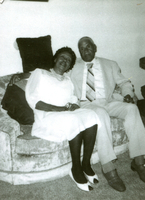
Black and white photo of Effie and Garfield Wilson at home sitting on the couch in their Sunday Best.
-
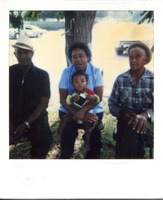
Color photo of Reverend and Mrs. Fowler, and Janice Hinchen Wilson's father (Mr. Garfield Hinchen on far right) and nephew sitting under a tree.
-
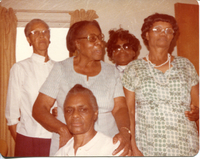
Color photo of, from left to right, Essie Green in back, Ms. Olivia Thomas, in front of her Ms. Beatrice Wilcots, Ms. Ola McDowell with pearls, and Arlene Bishop.
-
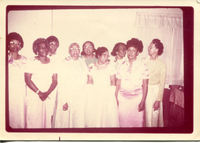
Color photo of, from left to right, Ms McDowell, Ms Benton, Ms Furlough, Ms Thomas and unknown -- far right Essie Green and Ms Henchen in front of Essie Green, 3rd from right Ms Wilcox.
-
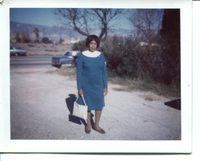
Color photograph Ola McDowell standing outside in a driveway wearing her ushers uniform for church at St. Marks.
-
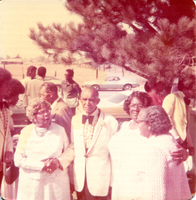
Color photo taken outside of Rev Williams, Ms Furlough, maybe Lucinda Harper, John Moore in back.
-
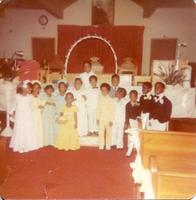
Color photograph of Tiffany, Aaron, and Their Friends at Tom Thumb Wedding at St. Marks Church.
-
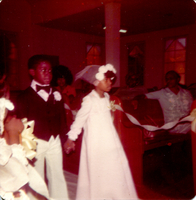
Color photograph of two young children in wedding attire walking down the isle at a church.
-
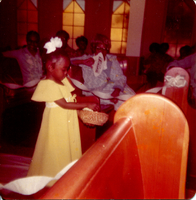
Color photograph of a young girl walking down the isle of a church, spreading flower petals from a backet. She is wearing a yellow dress and is the flower girl for Tom Thumb's wedding.
-
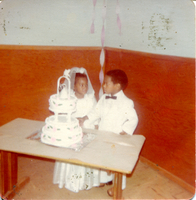
Color photograph of two children, Aaron and Tiffany, age 5, about to cut the cake at their wedding. The two children are dressed in formal wedding attire.
-
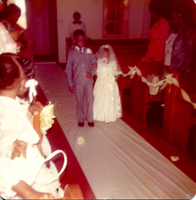
Color photograph of a two children walking down the isle at a church, the young boy is wearing a suit and the young girl is wearing a wedding dress with a veil.
-
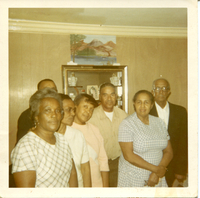
Color photograph of, from left to right, Ms Benton, Ms Wilcox, Ms Hinchen, and other unknown persons.
-
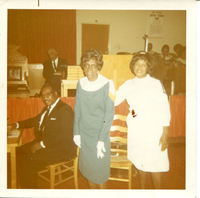
Color photograph of Mrs. Blanchette (center) being honored at St Marks with Ms Hinchen.
-
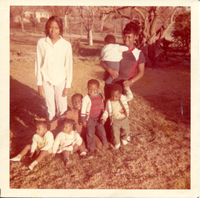
Color photograph of Janice Wilson in white with another unidentified woman and six younger children from her family, maybe cousins, taken in the backyard.
-
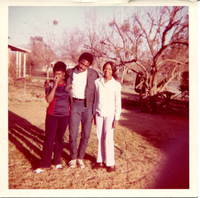
Color photograph of Janice Wilson in white with her cousins, standing outside in the lawn smiling at the camera.
-
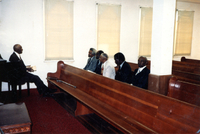
Color photograph of a men's Sunday School Class with David Green teaching, Gargield Henchen, Rev Amos and Deacon Vernon Ward. On back Jan 85 at Sunday school at St Marks.
-
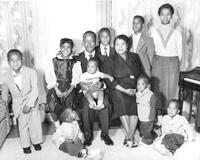
Black and white photograph of Jackson Family from left to right son Phillip, daughter Paula, Father Lawrence, John, Hastine Bradley Jackson, Irma. On floor from right to left Donald Jackson, Michael, on father's lap Stephen, and Ronald.
-
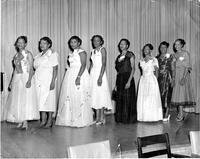
Black and white photograph of the Excel-All club. Founded by Espanola Larkin in the 1950s, this social club raised money to help schools, the recreation center, and churches in the Valley Truck Farm community. In the image is Donald Jackson's Mother, Hastine Bradley Jackson second from left, Eula Saville, some of her daughers, Mrs Larkin & second from right Alice Sneed.
-
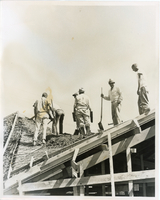
Black and white photo of construction workers in the process of building a new bridge.
-
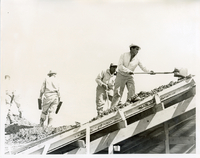
Black and white photograph of workers in the process of laying cement on the structure of a new bridge.
-
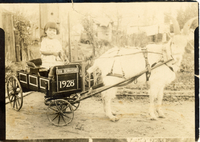
Black and white photo of a young child sitting in a small carriage that has been attached to a goat. Written on the carraige is "San Bernardino 1928".
-
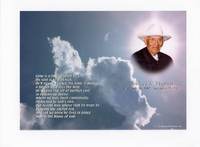
Memorial Image for Andres Ybarra, the first owner of Ybarra's Market, who lived from Nov 30th 1904 - Sep 29th 2001. On the photo is written, "Gone is a father loved by all,
His soul is now at rest.
He'll sleep in peace, his work is done.
A father's work--the best.
He'll know the joy of perfect rest
In heaven up above,
Where he may dwell contentedly
Protected by God's love.
Our hearts may grieve that he must lie
Beneath the sacred sod,
And yet we know he lives in peace within the house of God."
-
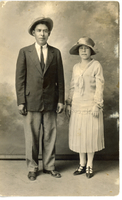
Sepia photo Uncle Felipe and his wife Maria posed for a portrait in formal attire.